
More Applicants, Less Fit: How Intelligent Matching Is Redefining Hiring Efficiency
- Insights

- Aug 1, 2025
- 10 min read
Updated: Mar 26
The Nordic talent landscape, characterized by robust economies and a highly skilled workforce, presents a unique paradox for HR leaders in Denmark and Norway. While the volume of job applications often appears abundant, the challenge lies in identifying candidates who are a true organizational fit amidst a persistent talent war.

This misalignment incurs substantial hidden costs, impeding strategic growth and undermining organizational performance. Intelligent matching, powered by advanced Artificial Intelligence (AI), offers a transformative solution, enabling HR leaders to navigate this complexity, enhance hiring efficiency, and secure a decisive competitive advantage.
Executive summary
Many Nordic organisations receive large numbers of applicants but struggle to fill key roles effectively. The result: wasted recruiter time, elevated direct and indirect costs, and delayed productivity.
The root causes lie in legacy screening methods, mis-aligned job profiles, and the rise of AI-written applications that inflate volume but not suitability.
Intelligent matching—leveraging AI-driven screening, predictive analytics, and cultural/behavioural fit modelling—offers a path to higher hiring precision.
Crucially, in the Nordic context, AI must be implemented thoughtfully: transparent, bias-aware, and integrated with human judgement to align with values of trust and equality.
We propose the “F.I.T. Framework” to guide organisations in recalibrating their recruitment approach: Filtering, Intelligent Match, Trust & Transparency.
The Paradox of “More Applicants, Less Fit”
In Denmark and Norway, HR teams report an influx of applications—even for niche roles—but only 1–2% typically reach interview stage. Traditional methods of filtering struggle to scale and often fail to assess fit beyond keywords. This mismatch leads to extended time-to-fill, higher cost-per-hire, and lower performance among hires. Hidden impacts include cultural disruption, ramp-up delays and weaker employer brand perception.
The Hidden Costs of Poor Fit
When a hire doesn’t align with role requirements or organisation culture, the consequences are heavy:
Replacement cost: estimates in Denmark reach 75–150% of the annual salary.
Productivity loss: supervisors spend ~17% of time managing under-performing staff.
Brand damage: negative candidate experience reduces future applicant quality.This level of risk transforms recruitment from a cost-centre into a strategic vulnerability.
Key Challenges for Nordic Adoption
Culture and Technology Integration
Nordic candidates value autonomy, equality and transparency. AI-driven hiring models must integrate human judgement to avoid alienation. When only ~26% trust AI decisions in hiring, the risk of reputation damage increases.
Ethical & Regulatory Compliance
With strict data protection laws (e.g., GDPR plus national statutes in Denmark and Norway), organisations must implement AI systems with full transparency, candidate consent and oversight mechanisms.
Candidate Experience
Automation should enhance, not replace, human interaction. Tools like chatbots and scheduling optimisation can improve responsiveness and engagement—but must be framed as service enhancements, not cold filtering.
Candidate Experience: Trust as a deciding factor
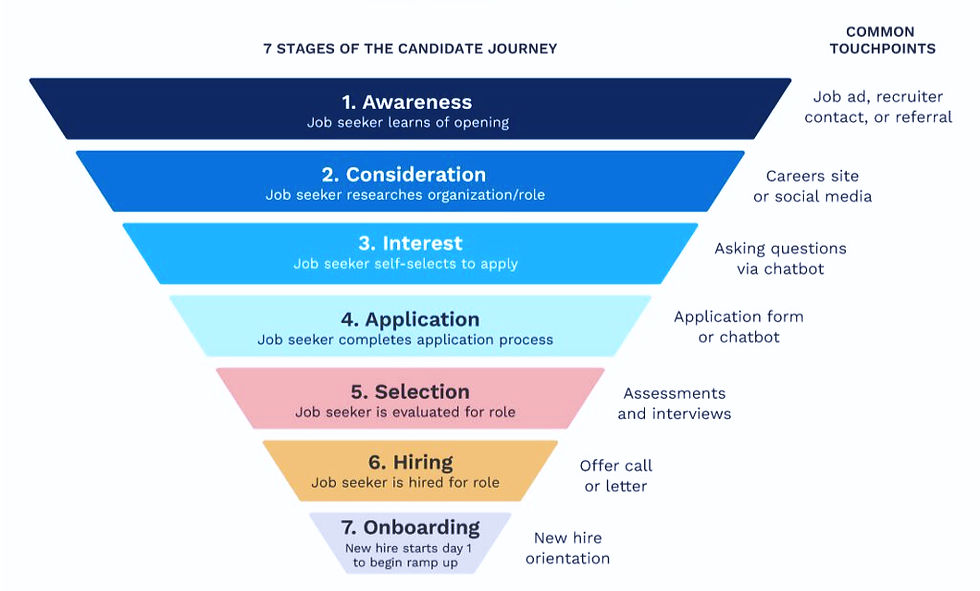
In the Nordics, the recruitment experience acts as a proxy for company culture.Slow processes, unclear communication or lack of feedback signal low respect — and can instantly shift candidates toward alternative offers.
The experience must therefore be fast, fair and human-centred:
What matters most to Nordic candidates
📌 Timely, transparent updates — no decision “silence”
🤝 Respect for time — streamlined steps, no waiting gaps
🧭 Clarity on role, expectations and next actions
👥 Real connection with future colleagues
⚖️ Fair treatment and consistent evaluation
What employers should implement✓ Share process timeline upfront✓ Confirm every step with clear next milestones✓ Automate updates — but ensure human follow-ups✓ Personalise interactions (names, context, empathy)✓ Collect and act on candidate feedback continuously
Strategic impactEnhanced engagement → higher acceptance → stronger brand equity
In the Nordics, the hiring journey is the employer brand.Optimising candidate experience is not only courteous —it’s a competitive advantage.
Driver | What it means | Impact on Candidate Decision |
Speed | Quick, predictable progression through stages | Prevents drop-off and offer competition |
Transparency | Clarity at every touchpoint — salary, timeline, expectations | Builds confidence and reduces uncertainty |
Humanity | Personal connection, empathy and feedback | Signals culture, respect and future belonging |
Implementation Roadmap
Redefine job profiles – Prioritise outcomes and fit, not only skills lists.
Deploy intelligent matching tools – Solve high-volume mismatch and surface better aligned candidates.
Integrate human review – Ensure every shortlisted candidate is reviewed by a person who assesses culture/fit.
Communicate openly – Explain how AI is used, what criteria matter, and how decisions are made.
Measure and iterate – Monitor quality-of-hire, time-to-fill and candidate feedback. Adjust models accordingly.
Takeaways for HR Leaders
Volume of applicants is not the metric—fit is.
Intelligent matching offers precision and speed, but only when balanced with human-centred values and transparency.
In Nordic markets, technology adoption must respect cultural norms of equality, trust and clarity.
Recruitment becomes strategic when it optimises for right hire, right time, not just many applications.
Resolution: Intelligent Matching Redefines Hiring Efficiency with AI
The challenges facing HR leaders in Denmark and Norway necessitate a strategic shift towards more sophisticated, data-driven talent acquisition. Intelligent matching, powered by Artificial Intelligence, offers a comprehensive resolution by fundamentally redefining hiring efficiency, enhancing precision, and fostering a more equitable process.
Core Concept: AI-Powered Talent Matching
Intelligent matching uses advanced AI — including machine learning, natural language processing and predictive analytics — to create a deeper, multidimensional understanding of both candidate profiles and job requirements. Instead of keyword filtering, it assesses capability, potential and cultural alignment. The result: faster shortlisting, more accurate hiring decisions and improved fairness and engagement throughout the process.
In the Nordic context, AI must be seen as augmentation, not automation. Evidence from Sweden shows that organisations adopting AI tend to increase hiring — not reduce it — creating new roles and expanding task capacity. Employment data also indicates that only a small share of workers face high automation risk, while a much larger portion will see their roles enhanced by AI-driven tools.
By relieving HR of administrative workload and reinforcing the human elements of recruitment, intelligent matching supports values central to Scandinavian culture: trust, equality and meaningful work. When positioned this way, AI becomes a catalyst for better hiring outcomes and broader labour-market growth — not a threat to existing jobs.
Automated Resume Screening: Precision at Scale
Automated Resume screening — a core component of intelligent matching — uses AI to rapidly extract and analyse structured data from applications, such as skills, experience, education and career trajectory. Instead of manual keyword checking, it applies scoring logic that highlights the most relevant candidates and filters out mismatches early in the funnel. The result is a faster, more accurate shortlist and a significantly reduced time-to-hire.
Its benefits extend across the recruitment value chain:
Efficiency and cost reduction High-volume applications are processed in seconds, cutting manual workload and allowing HR teams to redirect time toward strategic interactions.
Consistency and fairness Every applicant is evaluated using the same criteria, helping reduce unconscious bias and opening the door to a more diverse talent pool.
Higher candidate quality AI prioritises the applicants who demonstrate the most critical competencies and experience — improving hiring outcomes and reducing early attrition.
Reduced errors and blind spots Automated scanning ensures that important details are not missed due to human fatigue or time constraints.
In today’s market, AI-generated résumés contribute to a growing “more applicants, less fit” challenge — boosting volume without improving relevance. Intelligent screening counters this trend by using predictive scoring and gap-analysis models that distinguish genuine competence from artificial embellishment.
This shifts automated screening from a mere efficiency lever to a quality safeguard — critical for protecting hiring standards and elevating the integrity of the applicant pool in an era where AI can also be misused on the candidate side.
Predictive Analytics: Forecasting Success, Not Just Fit
Predictive analytics in recruitment uses patterns from historical hiring and performance data to forecast which candidates are most likely to succeed and stay. By shifting evaluation from intuition to analytics, it brings objectivity and future-orientation into talent decisions. Data is drawn from applications, assessments, interviews, and performance reviews — cleaned, structured and modelled to deliver meaningful insights.
The core value drivers include:
Skills and gap analysis AI evaluates which competencies truly impact performance and where development will be needed, enabling better hiring and early retention strategies.
Cultural and behavioral fit modelling Psychometric and sentiment analysis help assess whether a candidate aligns with organisational values and team dynamics — particularly critical in the Nordics, where trust, balance and humility are strong cultural expectations.
Predictive scoring Machine-learning models generate success and retention probabilities, allowing hiring teams to prioritise candidates with both immediate capability and long-term potential.
Pipeline optimisation Analytics identify bottlenecks, high-risk roles and upcoming skill shortages, enabling HR to plan proactively rather than react to gaps.
In practice, predictive analytics helps organisations hire for tomorrow, not just today — linking talent acquisition directly to strategic outcomes and future workforce needs. It allows Nordic employers to safeguard culture, increase performance quality, and proactively maintain the workforce resilience their economic model depends on.
AI-Powered Chatbots: Enhancing Candidate Engagement 24/7
AI-powered chatbots enhance candidate engagement by acting as always-on assistants. Using natural language processing, they interpret and respond to questions instantly, offer guidance on roles and application steps, and provide a tailored experience across languages and time zones. This creates a more accessible and responsive candidate journey — a strong differentiator in tight Nordic labour markets.
The benefits span both experience and efficiency:
Stronger candidate experience Continuous, personalised support helps candidates feel guided rather than ignored — reducing the perception of “ghosting” and strengthening employer brand trust.
Recruiter productivity Chatbots automate routine queries and administrative follow-ups, allowing HR teams to shift time toward relationship-building and more strategic decision-making.
Faster hiring cycles Immediate screening and status updates speed up the process, increasing the likelihood of securing top talent before they exit the funnel.
Nordic adoption already shows tangible success: Norway’s welfare agency introduced a chatbot that now handles the workload equivalent of dozens of advisors daily — proving digital assistants can scale service quality without sacrificing human values.
By reinforcing communication, responsiveness and fairness, chatbots help close the trust gap in recruitment — a core expectation in the Nordics — and contribute directly to higher engagement and higher acceptance rates.
Interview Scheduling Optimization: Streamlining the Human Connection
Automated interview scheduling removes one of the most time-consuming friction points in recruitment: coordinating calendars. AI-enabled systems integrate with hiring managers’ and candidates’ schedules, identify available overlaps, and arrange interviews in seconds — even for multi-participant panels or across time zones.
The benefits are multifold:
Faster hiring cyclesEliminating back-and-forth emails and calls significantly shortens the administrative phase — often reducing time-to-hire by up to 50%.
Fewer errors and disruptionsAutomation prevents common mistakes like double bookings and time-zone confusion, ensuring a smoother process for both sides.
More candidate empowermentSelf-service scheduling allows candidates to choose convenient times instantly, increasing engagement and reducing frustration.
Higher recruiter productivityTime freed from coordination is reinvested into strategic work: strengthening sourcing, building relationships and coaching candidates — outcomes that directly improve hiring quality.
In a competitive market, the ability to move quickly without compromising experience can be decisive. Automated scheduling supports both priorities at once: efficiency for recruiters and autonomy for candidates — a combination strongly aligned with Nordic expectations of fairness and respect.
Strategic Implementation in the Nordic Context: Navigating Nuance
To successfully deploy intelligent matching solutions in Denmark and Norway, organisations must go beyond technical implementation. Responsible adoption requires alignment with Nordic cultural values, diversity objectives and strict data-privacy regulation.
A) Culture First: AI must enhance, not replace, the human element
Nordic work culture prioritises trust, fairness, inclusion and humility — driven by traditions such as the Law of Jante. While AI is welcomed as an efficiency driver, evidence shows a notable trust gap: many candidates perceive fully automated hiring as impersonal and potentially unfair.
A hybrid model is therefore essential:AI handles volume and administration → humans maintain relational touchpoints.Transparency, explainability and “human-in-the-loop” decision-making help reinforce credibility and acceptance.
Strategic impact: AI elevates HR from manual processing to high-value human interaction — entirely consistent with the Nordic expectation of people-centric workplaces.
B) Diversity & inclusion: AI as an equity accelerator
Nordic employers still face barriers to equitable hiring — research shows lower call-back rates for candidates with foreign names or disclosed mental-health conditions.When designed responsibly, intelligent matching can reduce structural bias through:
Blind screening (removal of personal identifiers)
Bias-free job posting language
Consistent, structured assessments
Predictive monitoring of bias patterns
Improved access to diverse candidate pools
Combined with human oversight, this approach not only increases fairness but strengthens innovation and talent depth across teams.
Strategic impact: AI becomes a force for inclusion, reducing missed potential and widening the hiring aperture.
C) GDPR & compliance: privacy by design
The Nordics enforce some of Europe’s strictest data-protection standards to maintain compliance and trust, organisations must ensure:
Lawful data processing with explicit, informed consent
Minimal collection of sensitive information
Candidate rights to access, correct or delete data
Human oversight on decisions with real impact (GDPR Art. 22)
Mandatory DPIAs for high-risk data use
Clear vendor governance through Data Processing Agreements
Proactive compliance — with regular audits, transparency and secure data architecture — positions organisations as responsible technology adopters and protects their employer brand.
Strategic impact: AI strengthens recruitment without compromising privacy, fairness or legal integrity.
Summary: Nordic-aligned AI adoption
Nordic Expectation | Risk if Ignored | AI-Enabled Response | Business Value |
Equality & trust | Skepticism and offer drop-off | Human-in-the-loop + explainable AI | Higher offer acceptance |
Diversity & inclusion | Biased outcomes | Blind screening + predictive bias checks | Broader talent pool, stronger teams |
Privacy & autonomy | Regulatory penalty | GDPR-first design + transparency | Reduced legal risk, brand confidence |
Conclusion: Responsible AI augments human judgment — not replaces it.This is precisely why it fits the Nordic environment so well.
Conclusion and Recommendations: A New Era of Talent Acquisition
The Nordic talent market — highly skilled yet increasingly supply-constrained — faces a critical paradox: more applicants, fewer strong fits. For organisations in Denmark and Norway, this misalignment fuels hidden financial costs, productivity stalls and long-term damage to employer reputation. Traditional recruitment simply cannot keep pace with the complexity and expectations of today’s market.
Intelligent matching offers a path forward. AI-enhanced screening, predictive analytics, chatbots and automated scheduling do more than accelerate processes — they improve decision quality, anticipate future talent needs and elevate trust through faster, more personalised engagement.
Importantly, in the Nordic context, AI must augment, not replace, human expertise. When administrative barriers are removed, HR can redirect focus to what Nordics value most: strong relationships, transparent communication and fair assessment.
To unlock full value, HR leaders should:
Invest decisively in integrated intelligent matching platformsshifting resources from volume management to quality-of-hire.
Design hybrid hiring modelswhere automation handles scale and humans drive judgment and connection.
Embed responsible AI governancethrough bias monitoring, transparency and GDPR-aligned practices.
Build AI fluency across HR and hiring teamsto accelerate adoption and unlock broader strategic use cases.
Leverage specialised Nordic-focused advisory partnersto ensure cultural fit, risk mitigation and maximum ROI.
By combining technological precision with Scandinavian values of trust, equality and inclusion, organisations can reframe recruitment from a cost centre into a growth engine — securing the right talent, faster, and with confidence.
About the Author

Felix W. Gliem
For nearly a decade, the Management Consultant and Headhunter in the role as Managing Partner at Friis+Borgesen, Nyborg Executive Consulting, has been assisting companies of all sizes to identify exceptional executives and specialists across various sectors, including Sales, Finacial & Banking, Engineering, IT, Technology, and Healthcare. With a particular focus on the Scandinavian market, we collaborate with innovative companies to develop talent and organizational strategies throughout Nordic Executive Search and Leadership Advisory.


Comments