
The critical role of Strategic Workforce Planning in the Age of AI
- Insights

- Jul 3
- 9 min read
The advent of generative artificial intelligence has introduced a fundamental paradox into the Nordic corporate landscape: while technology has increased the volatility of required skills, it has simultaneously provided the analytical tools necessary to master this uncertainty.

In Denmark, where a robust digital infrastructure meets a critical shortfall of specialized labor, Strategic Workforce Planning (SWP) is no longer a peripheral HR function but a core strategic discipline. Organizations that move beyond reactive recruitment to embrace AI-driven, predictive talent orchestration—what is termed the "Nordic Edge"—will not only bridge the looming skills gap but also redefine productivity in the cognitive industrial revolution.

This article argues that for Danish mid-sized and large enterprises alike, the ability to align human capital with technological capability is the only sustainable path to long-term resilience and growth.
Key Findings
The "Literacy Paradox" indicates that while 80% of Danish knowledge workers anticipate role transformation via AI, only 10% are actively developing the skills required for this shift, creating a significant organizational readiness gap.
Predictive workforce analytics can reduce time-to-hire by 50% and achieve an 80% accuracy rate in identifying turnover risks, offering a vital defense against Denmark's projected shortfall of 150,000 skilled workers by 2035.
Strategic Workforce Planning (SWP) acts as a force multiplier for Danish SMEs, where 84% of firms currently cite internal knowledge gaps as the primary barrier to AI-driven productivity gains.
A shift from headcount-based budgeting to task-based orchestration is required, as 40% of Danish working hours are technically automatable, necessitating a total redesign of traditional job roles.
Strategic Key Takeaways
Treat Talent as a Strategic Asset: Move beyond administrative headcount tracking to treat talent allocation (skills, roles, and capacity) with the same analytical rigor as financial capital, ensuring that talent shortfalls do not become the primary constraint on growth.
Establish a Cross-Functional 'Talent Alliance': CEOs must unify the CHRO or CPO, CIO, and legal counsel into a core leadership group to coordinate reskilling at scale and manage the intersection of technological capability and human workflows.
Adopt Scenario-Based Workforce Modeling: Shift from static yearly planning to dynamic models that stress-test staffing and skill needs against multiple plausible futures, such as varying rates of AI adoption and market volatility.
Deconstruct Roles into Task-Based Workflows: Identify routine tasks for automation to enable "superagency," allowing the workforce to focus on high-value "human" competencies like complex problem-solving, empathy, and strategic judgment.
Operationalize Responsible Governance: Build trust and mitigate "AI-washing" by implementing clear, transparent ethical frameworks and guidelines that align with Nordic values, converting workforce anxiety into innovative participation.
Market Observation: The Danish AI Adoption Duality
Denmark enters 2026 as a global frontrunner in digital preparedness, ranking second worldwide on the IMF’s AI Preparedness Index. This high ranking is supported by a society characterized by high trust, a well-educated labor force, and a rapid acceleration in corporate AI adoption, which nearly doubled between 2023 and 2025. However, beneath this veneer of readiness lies a concerning duality. While 70% of Danish organizations now use AI tools—predominantly large language models like ChatGPT—most usage remains experimental rather than strategic.

The "GenAI Paradox" in Denmark is defined by a 70-point gap between the transformation employees expect and the preparation they are undertaking. Furthermore, only 20% of large Danish enterprises have integrated AI as a core component of their corporate strategy, leaving the remaining 80% vulnerable to "AI-washing" and cynical internal cultures. In the mid-market, the situation is more acute: while 98% of Danish firms are SMEs, only a small fraction have systematically implemented AI solutions, primarily due to a lack of expert knowledge and specialized talent.
This landscape creates a precarious environment where Denmark risks losing its competitive edge to global rivals unless it can successfully translate technological potential into human capability.
Comparative Regional Adoption and Economic Impact
The following table contextualizes Denmark's position within the Nordic and European AI landscape, highlighting the divergence between general adoption and the actual realization of productivity gains.
Metric | Denmark | Finland | Sweden | EU Average |
General GenAI Adoption (2025) | 65% | 62% | 53% | 37% |
Regular White-Collar Usage | 16% | 20% | 24% | 54% (Global) |
Firms Citing Talent Shortage | 67% | 60% | 58% | 32% |
Projected Annual GDP Impact (Bn €) | €10-15 | €12-18 | €15-22 | N/A |
Guideline Compliance Rates | 71% | 68% | 56% | N/A |
Data synthesized from BCG, Solita, and European Investment Bank (EIB) reports.
Mitigating Uncertainty Through Predictive Orchestration
In the traditional management model, uncertainty is often viewed as a reason to delay strategic commitments. However, the current pace of technological advancement—described as a "cognitive industrial revolution"—renders wait-and-see approaches obsolete. The first argument for the critical role of Strategic Workforce Planning (SWP) is that it transforms GenAI from a source of volatility into a tool for strategic clarity.
From Static Planning to Scenario-Based Agility
GenAI has increased uncertainty regarding which skills will remain relevant. Roles in product development, design, and software engineering have already seen demand shifts, with entry-level positions in these fields declining by up to 17% as automation absorbs routine coding and design tasks. SWP allows leaders to move away from static headcount planning toward a dynamic, scenario-based model. By developing at least three plausible futures (base, upside, and downside), organizations can stress-test their staffing needs against different rates of AI adoption.
6 Steps to AI-driven Strategic Workforce Planning

This analytical rigor enables the "fluidity of resources," allowing firms to understand future capacity gaps before they manifest as operational bottlenecks. For example, a large manufacturer may use SWP to determine whether to expand its footprint based not just on financial capital, but on the "talent capital" available to run an automated plant.
When strategic workforce planning is embedded as a core management discipline, it provides a fact-base for all talent decisions, ensuring that trade-offs are explicitly discussed with enterprise value in mind.
Task Deconstruction and the Superagency Effect
A critical insight from recent research is that:
AI does not replace jobs; it replaces tasks.
McKinsey notes that 40% of current work hours could be automated by 2030, particularly those involving data processing and report formatting. SWP allows Danish executives to map these tasks precisely. By identifying "repetition-heavy" versus "judgment-heavy" activities, firms can redesign workflows to empower employees with "superagency"—the ability to use AI as a cognitive exoskeleton to perform higher-value work.
SWP is the mechanism that identifies the optimal balance, ensuring that human talent is allocated where it generates the highest return on investment.
The Mid-Market Growth Engine and Talent Retention
For Denmark’s 300,000 SMEs (SMVs), workforce planning is often the difference between scaling successfully and stagnating in the face of rising costs.
While large corporations have the luxury of dedicated AI taskforces, mid-sized companies must be more surgical in their talent investments.
Bridging the Knowledge Gap
The primary barrier for Danish mid-market companies is not a lack of interest in AI, but a significant "knowledge gap." Approximately 37% of firms that have not yet adopted AI report that they simply do not know what kind of help would be useful to them.

SWP serves as a diagnostic tool for these organizations, helping them conduct a systematic "Gap Analysis" to compare existing workforce competencies with the skills needed for digital transformation.
By identifying these gaps early, mid-sized firms can avoid the "hire-fire" cycle and instead focus on upskilling. This is particularly relevant in sectors like construction, where 90% of Danish firms report acute skill shortages. Strategic planning allows these firms to identify underleveraged talent pools and build "skills-first" hiring roadmaps that prioritize learning agility over static credentials.
Predictive Retention as a Competitive Edge
The cost of employee turnover is especially high for mid-sized firms, where individual employees often hold significant institutional knowledge. AI-driven talent management platforms now offer "predictive turnover modeling," which can identify flight risks 6 to 9 months before a formal resignation. These models analyze behavioral signals—such as decreased participation in internal platforms or changes in performance review patterns—with high accuracy.
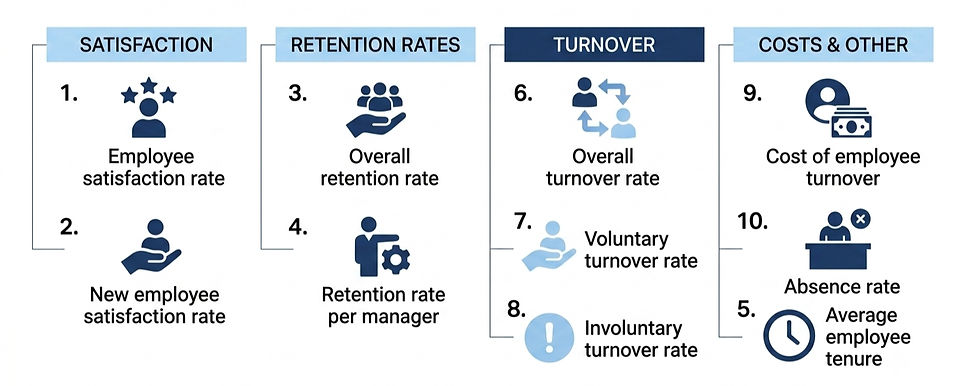
For a Danish SME, implementing these predictive insights allows for targeted retention interventions. Organizations that act on these insights within 30 days see retention improvements of 35% to 45% among high-value talent, significantly reducing the costs associated with recruitment and onboarding.
Optimized Recruitment Metrics
Recruitment Metric | Traditional Approach | AI-Driven SWP Approach | Potential Improvement |
Time-to-Hire | 60-90 Days | 30-45 Days | 50% Reduction |
Candidate Quality Score | Intuition-based | Data-driven matching | 35% Improvement |
Application Completion | 20-30% | Up to 95% (via Chatbots) | 3x Increase |
Scheduling Time | Manual coordination | Automated/Autonomous | 99% Reduction |
The Nordic Edge – Humanity and Analytics Integrated
The third argument for the strategic necessity of workforce planning in Denmark centers on the "Nordic Edge" approach. This approach integrates advanced analytics with the region's hallmark human-centric leadership, transforming technology from a perceived threat into a cultural differentiator.
Transparency and the Fear-Innovation Gap
In Denmark, 38% of employees express fear of job loss due to AI, a sentiment that creates "defensive behavior" and resistance to change. The Nordic Edge approach acknowledges that successful AI adoption is 70% about people and culture. SWP provides the framework for "responsible AI" by clarifying exactly how technology will augment, rather than replace, human roles.
Leaders who use SWP to articulate a clear vision—identifying "stability zones" and "transformation zones"—build the trust necessary for experimentation. In Denmark, companies with high guideline compliance (71%) also show the highest adoption rates (65%), proving that clear governance and transparency provide the psychological safety needed to embrace innovation.
Leading Through Digital Competitiveness
The 2024 Draghi Report emphasizes that Europe, including Denmark, is losing ground in global technological leadership. Strengthening Denmark's position requires industry to take the lead in building "transatlantic learning" connections, using ecosystems like Silicon Valley as benchmarks for ambition.
Strategic Workforce Planning allows Danish leaders to identify the specific leadership profiles required for this new era: executives who possess both technical fluency and the emotional intelligence to lead through uncertainty. By using "Retention Analytics" and "Talent Intelligence," firms can ensure they are appointing leaders who can translate strategy into measurable results while maintaining the inclusive culture that defines Nordic organizations.
Implications for Executives: A Strategic Mandate
For the C-suite, the transition to AI-driven workforce planning requires a fundamental shift in mindset and operations.
1. Elevate the Talent Alliance
AI’s impact on the workforce cuts across every function, making it impossible for the CHRO to manage the transition in isolation. CEOs must form a "Talent Alliance" consisting of the CHRO, CIO, and legal counsel to coordinate upskilling programs and redesign workflows. This alliance ensures that AI initiatives are in service of enterprise priorities, not just isolated IT projects.
2. Democratize AI Fluency
Upskilling must move beyond once-a-year workshops. Leaders should commit to "at-scale" upskilling programs where learning is embedded into the flow of daily work. This includes providing employees with "AI sandboxes" to test tools under governed parameters. Success should be measured by progress in developing core "human" competencies—problem-solving, creativity, and collaboration—that AI cannot replicate.
3. Operationalize Responsible Governance
With the EU AI Act and the NIS2 Directive imposing strict requirements on data privacy and board-level accountability, governance must be operationalized. Executives should implement automated compliance platforms that map controls and validate data protection in real-time. This ensures that as the organization scales its AI usage, it does so within an ethical framework that preserves the high levels of trust inherent in the Danish labor market.
4. Move from Reactive to Predictive Hiring
The projected shortfall of 150,000 workers is a clear signal that the "war for talent" is entering a new phase. Executives must invest in "AI-powered pipelines" that find talent before it is needed. This requires shifting recruitment teams from administrative tasks to relationship-based hiring and assessment. By using "Talent Intelligence" to benchmark their workforce against competitors, leaders can set priorities that reflect the true market realities.
Conclusion: The Resilient Organization
The current era of rapid technological change has made one thing clear: the organizations that succeed will be those that treat their workforce with the same analytical rigor they apply to their financial capital. Strategic Workforce Planning is the bridge that allows Danish companies to cross the "uncertainty gap," turning the disruptive force of AI into a structured advantage.
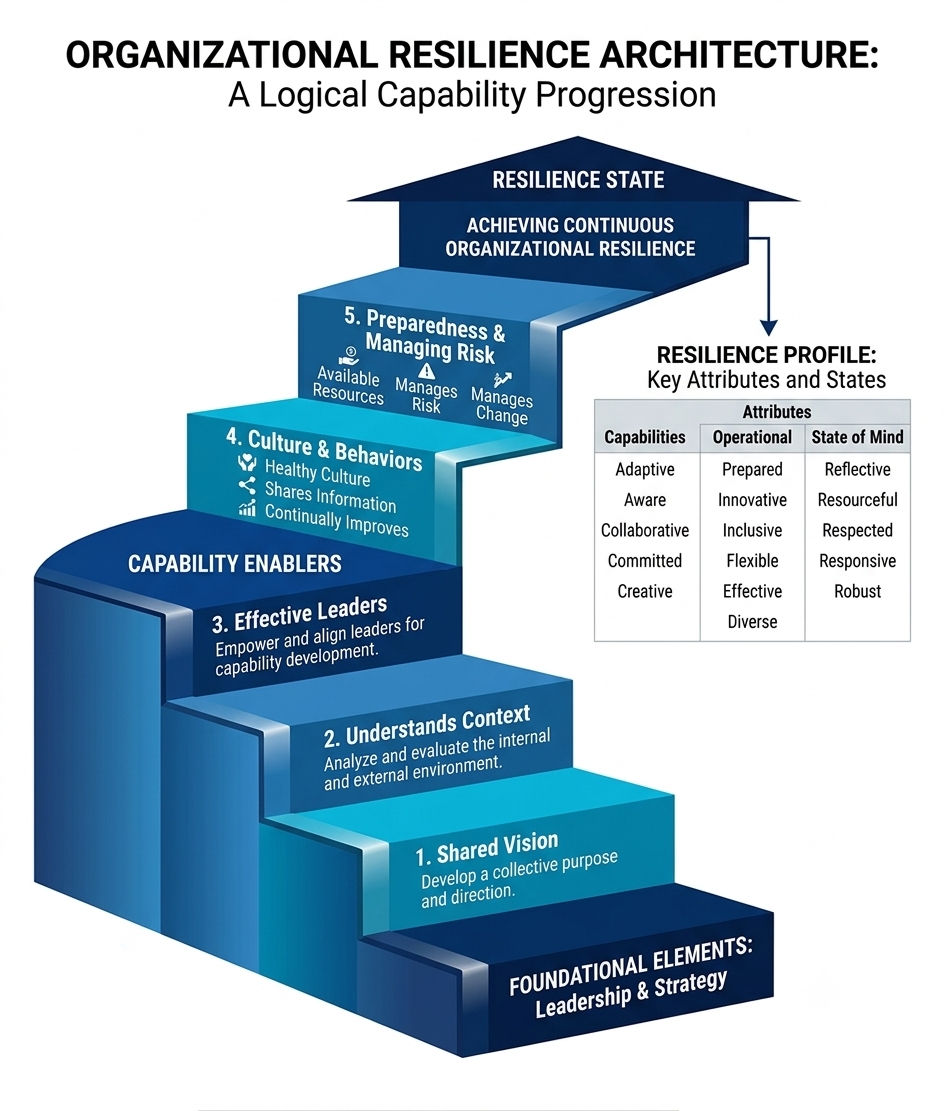
For mid-sized companies in Denmark, SWP offers a path to sustainable growth by optimizing recruiting, increasing retention, and providing a clear view of future talent needs. For larger enterprises, it is the foundation of the "Nordic Edge," ensuring that technological scale never comes at the expense of human-centric values.
In the age of AI, the ultimate competitive parameter is the ability to foresee, plan, and execute the workforce transformation that the technology demands. Those who anchor their strategy in predictive, strategic planning will find the tailwind to harness future prosperity.
The Framework for Implementation: A Multi-Year Roadmap
Phase 1: Foundation (3-12 months)
Establish the Talent Alliance: Form the cross-functional leadership team.
Conduct Initial Gap Analysis: Map current skills against a 3-year digital strategy.
Implement AI Guidelines: Set clear boundaries for experimentation while managing risks.
Deploy Predictive Analytics for Retention: Focus on high-value, high-risk roles.
Phase 2: Integration (Year 2)
Redesign Workflows: Deconstruct roles into tasks and automate routine activities.
Scale Upskilling: Embed AI literacy programs into daily workflows.
Launch Predictive Recruitment Pipelines: Move toward finding talent before the need arises.
Operationalize Compliance: Automate reporting for NIS2 and EU AI Act.
Phase 3: Optimisation (Year 3+)
Foster "Superagency" Culture: Empower employees to lead their own role transformations.
Continuous Scenario Planning: Use AI to simulate the impact of new breakthroughs on the workforce.
Benchmark for Global Competitiveness: Use Silicon Valley benchmarks to drive ambition.


Comments